
New Bern City Directory Collections
The Kellenberger Room at 400 Johnson Street is the central local place for directory, microfilm, census, photograph, oral-history, and county-record research. Its holdings also include vertical files, family material, and newspaper resources that can fill a gap between printed editions. Call 252-638-7800 before a visit to confirm the needed year, box, and access conditions. DigitalNC supplies several free scanned directories, while the library room supplies the local context and materials that are not fully indexed online.
| Collection | Years represented | Where held | Access route |
|---|---|---|---|
| New Berne Business Directory | 1893 | Kellenberger Room | Digitized exhibit and local-history research |
| Hill city directories | 1904-1905, 1911-1912 | DigitalNC and Kellenberger | Searchable scans, including a street guide in 1911-1912 |
| Baldwin directory | 1937 | DigitalNC | Digitized resident and business entries |
| Con Survey and supplements | 1954, 1958 | DigitalNC | Search the base volume and supplement separately |
| Hill directories | 1964, 1966, 1967 | DigitalNC and Kellenberger | Alphabetical and household or street-guide formats |
The collection is not one uninterrupted annual run. Start with the edition nearest the event or address in question, record the edition and page, then move in both directions through the documented years. The 1893 volume is especially helpful around the missing 1890 federal census, but Kellenberger cautions that it is a practical guide rather than a complete census substitute.
Kellenberger Room’s local-history collection is the source for this view of the New Bern city directory holdings.
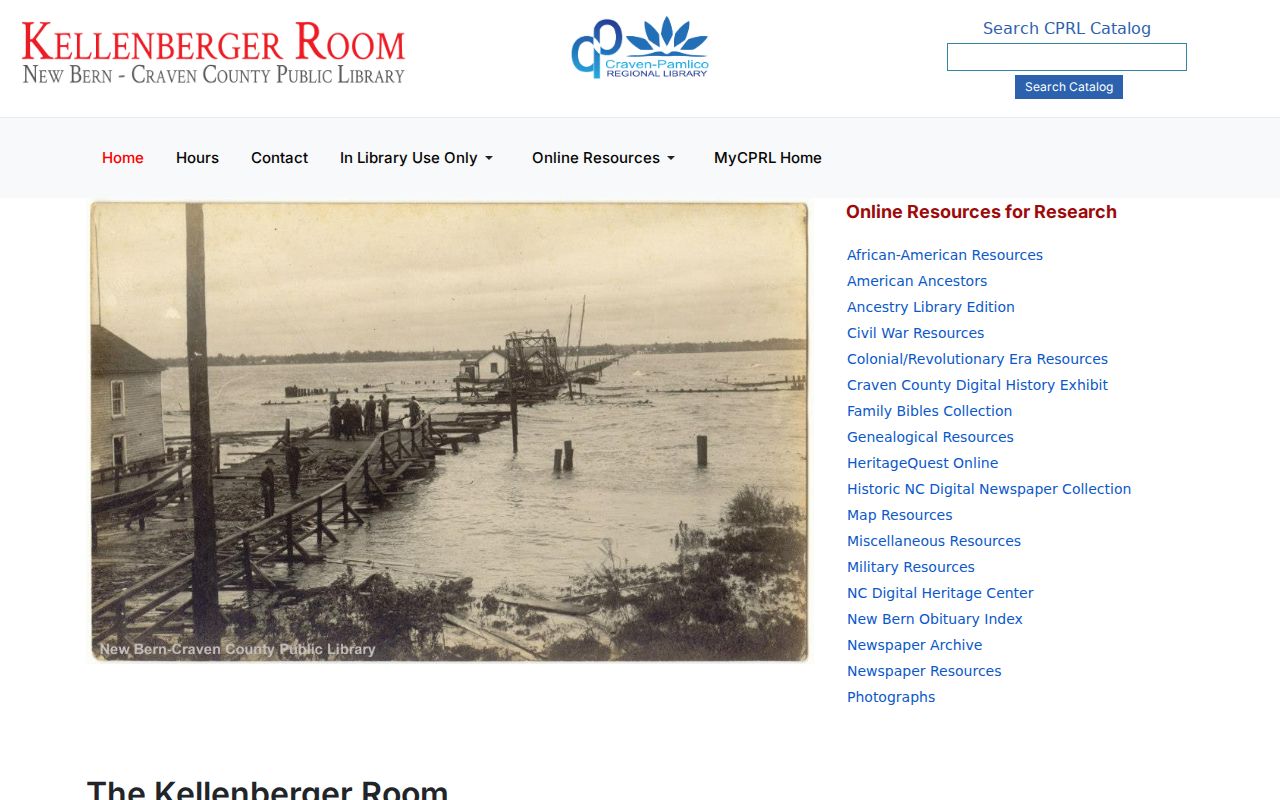
The collection brings directories together with newspapers, microfilm, files, and local books, making it possible to test a name or address against more than one kind of record.
New Bern’s 1893 City Directory
The 1893 New Berne Business Directory was published by Edwards & Broughton and compiled by Hatchett & Watson. Kellenberger describes it as a major printed listing from the period when the 1890 federal census is absent. It includes citizens and businesses, so it can preserve a surname, street setting, listed pursuit, or firm connection that does not appear in a census record for that decade.
Its own scope warning matters. The directory was made as a practical city guide, not as a full count of every person. Preserve the spelling exactly as printed and read the surrounding entries before matching a person to another record. A nearby listing can clarify whether a name belongs to a shop, household, institution, or street cluster.
Kellenberger’s 1893 directory exhibit provides the scanned local source and its context note.
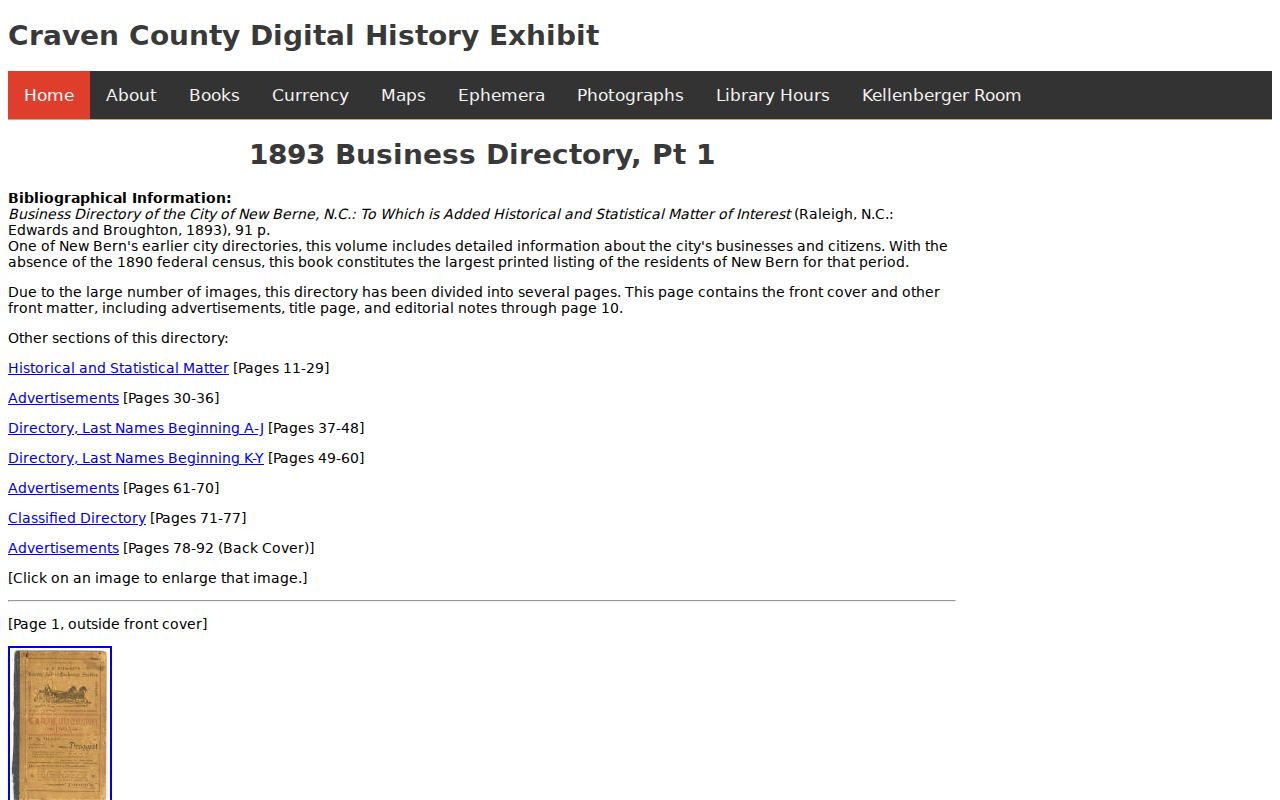
That source is best read as evidence from one printed moment, then checked against a later directory, a map, or a county record.
Hill’s New Bern City Directory
The 1904-1905 Hill Directory Company volume is described as the first issue. Its alphabetical material carries names, addresses, firms, and local statistics. The scanned introduction reports 5,316 names excluding firms and uses a population estimate based on that count. That calculation belongs to the publisher’s introductory method, not to a modern count or proof that every local person was listed.
For a person search, save the page image as well as the text-search result. Initials, abbreviations, and scan errors can make a plain text hit misleading. Compare the home address with a later street guide, then use a deed or parcel record only when ownership needs separate confirmation.
DigitalNC’s 1904-1905 New Bern directory record identifies the contributing library and gives access to the scan.
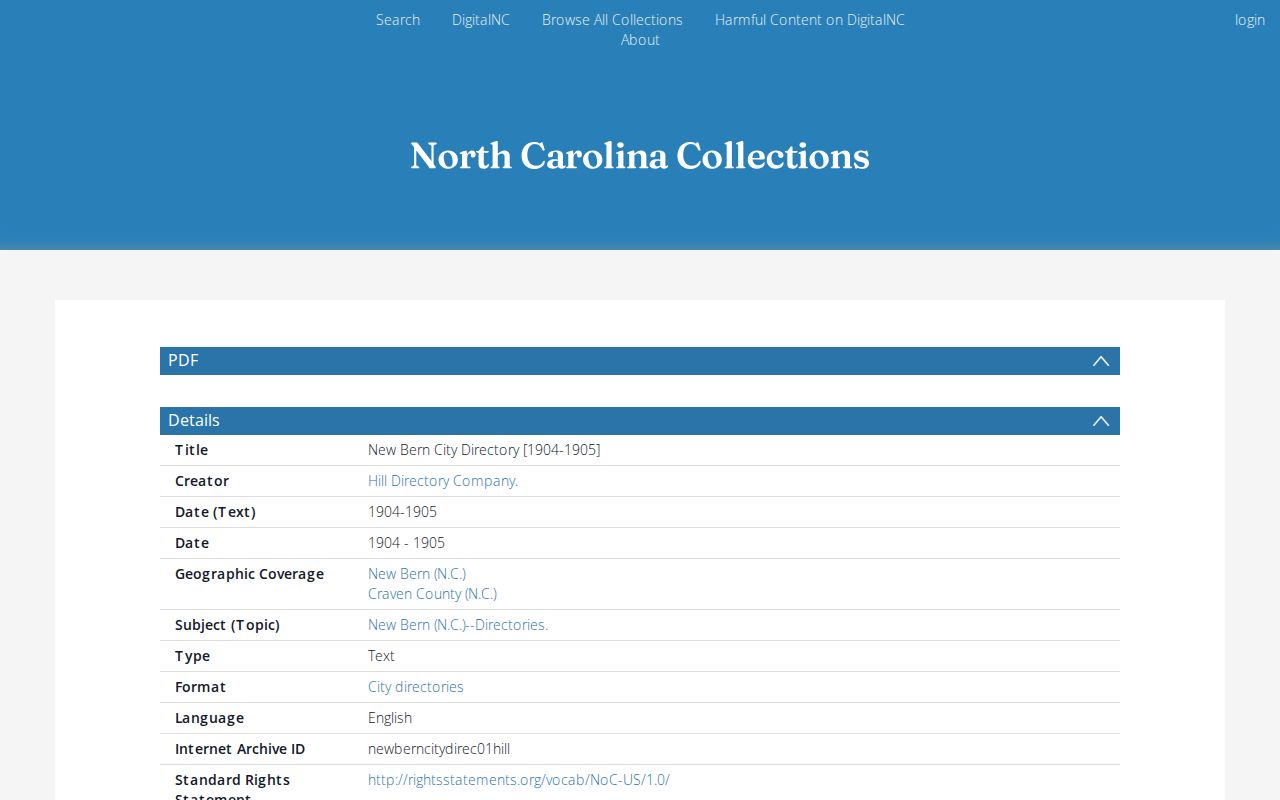
DigitalNC makes the printed volume searchable, but the displayed page remains the controlling source when lettering or layout is unclear.
New Bern’s Reverse Street Guide
The 1911-1912 Hill volume adds the feature that makes a New Bern city directory useful from an address backward: a street guide. Its general section gives a person’s name, listed pursuit, and residence address. The street section reverses the route by placing a street address with an occupant, which is useful when an old postcard, deed, or family note supplies a number but no surname.
- Copy the street name and number exactly as shown in the older record.
- Check the alphabetical section for a matching surname or first-name variant.
- Use the street guide to confirm the address position and nearby entries.
- Record the edition, page, page side, and any abbreviations before comparing another source.
Queen Street is one documented example of the address-to-person route. It should not be assumed that a directory resident owned the parcel. For the longer backward trail of a single address, use the previous residents search with the deed and parcel evidence.
Note: A later address can differ from an older printed address, so a parcel, plat, or map may be needed before treating two listings as the same place.
New Bern City Directories 1941 to 1967
DigitalNC’s official directory article lists a 1941 directory, the 1954 Con Survey and supplement, the 1958 directory and supplement, and Hill runs for 1964, 1966, and 1967. The separate supplements matter because a search that stops at the base volume can miss a later addition. These are documented searchable runs, not evidence of an unbroken directory series for every year between them.
The 1966 introduction describes an alphabetical portion intended to identify adult residents with marital notation, address, and firm information when available. Its household and street-guide portion orders numbered streets numerically and named streets alphabetically, then places house numbers and householders beneath each street. It also extends into nearby communities and rural routes, so a New Bern label can cover a broader service area than the city boundary.
The DigitalNC directory-year list is the best starting point for selecting a documented mid-century volume.
Reading a New Bern Directory
Read the entry as a compact period record, not as a modern profile. The 1893 listing can give a citizen or business context. The 1904-1905 volume can give a name, home address, firm, and other local notation. The 1911-1912 general and street sections can test a name against an address. The 1966 volume may add marital notation, phone, ZIP, and street-guide placement where printed.
- Alphabetical entry
- A name-first listing that can carry an address and other printed notation.
- Street guide
- An address-first section that groups house numbers and householders along a street.
- Supplement
- A separate add-on volume that should be searched alongside its base directory.
- OCR
- Machine-read text from a scan. It speeds searching, but the page image controls if a name is misread.
Match initials, spouse notation, a first-name variant, or a changed listed pursuit across editions with care. A move, a death, an omission, or a different spelling can all explain why a name disappears. The next directory, a newspaper notice, estate material, and a federal census schedule can help distinguish those possibilities.
Kellenberger’s New Bern Memory Sources
Directories are only one shelf of the local story. Kellenberger reports newspapers on microfilm from 1751 to the present, though some years are missing, along with clippings, pamphlets, family files, neighborhood files, cemetery information, photographs, oral histories, census books, and county material. Its vertical files can point to New Bern family names, Dryborough, Duffyfield, Five Points, historic districts, organizations, churches, and annexation subjects.
The “Memories of New Bern” oral-history project includes hundreds of hours and transcripts touching on downtown life, racial relations, and the Great Fire of 1922. Those materials can provide community context when a directory entry only shows a name and number. They should be cited as recollections or local-history sources, not treated as substitutes for a dated directory, deed, or census image.
Note: The vertical-file list is a research map of subjects, not a searchable master list of everyone connected with New Bern.
Dryborough and Five Points Context
Older New Bern city directories become clearer when placed in local geography. Dryborough was platted in 1806 and annexed to New Bern in 1859. The Historical Society describes it as a racially diverse, working-class neighborhood with free Black artisans, properties, and dense blocks. A search limited to a current district label can miss a historical Dryborough reference in a directory, newspaper, map, or file.
Five Points, west of downtown around Broad, Roundtree, and Queen, had more than three dozen Black businesses by the 1940s according to Historical Society material. Broad Street and US 17 widening demolished Palm Garden in 1950. The African American Heritage Trail, Kellenberger files, newspapers, and oral histories can add place history where a printed listing is brief.
New Bern Directory Crosschecks
A reliable historical match needs separate evidence streams. Use a directory to establish a printed name and address for an edition. Use a federal census schedule when it is released under the 72-year rule, with 1950 identified by the State Library as the latest released schedule in the research. Use a deed or tax record for ownership, because a listed resident is not automatically the owner. Use maps to test whether the building or street context fits the period.
New Bern has an 1885 Library of Congress Sanborn map and an official list of ten maps from 1885 through 1948. Preservation material names later map updates in 1898, 1904, 1908, 1913, 1924, 1931, and 1948. Newspapers, obituaries, and estate records can then help explain a death, move, or later family connection. Keeping the edition, page image, search term, and match reason with each note makes later checking possible.